
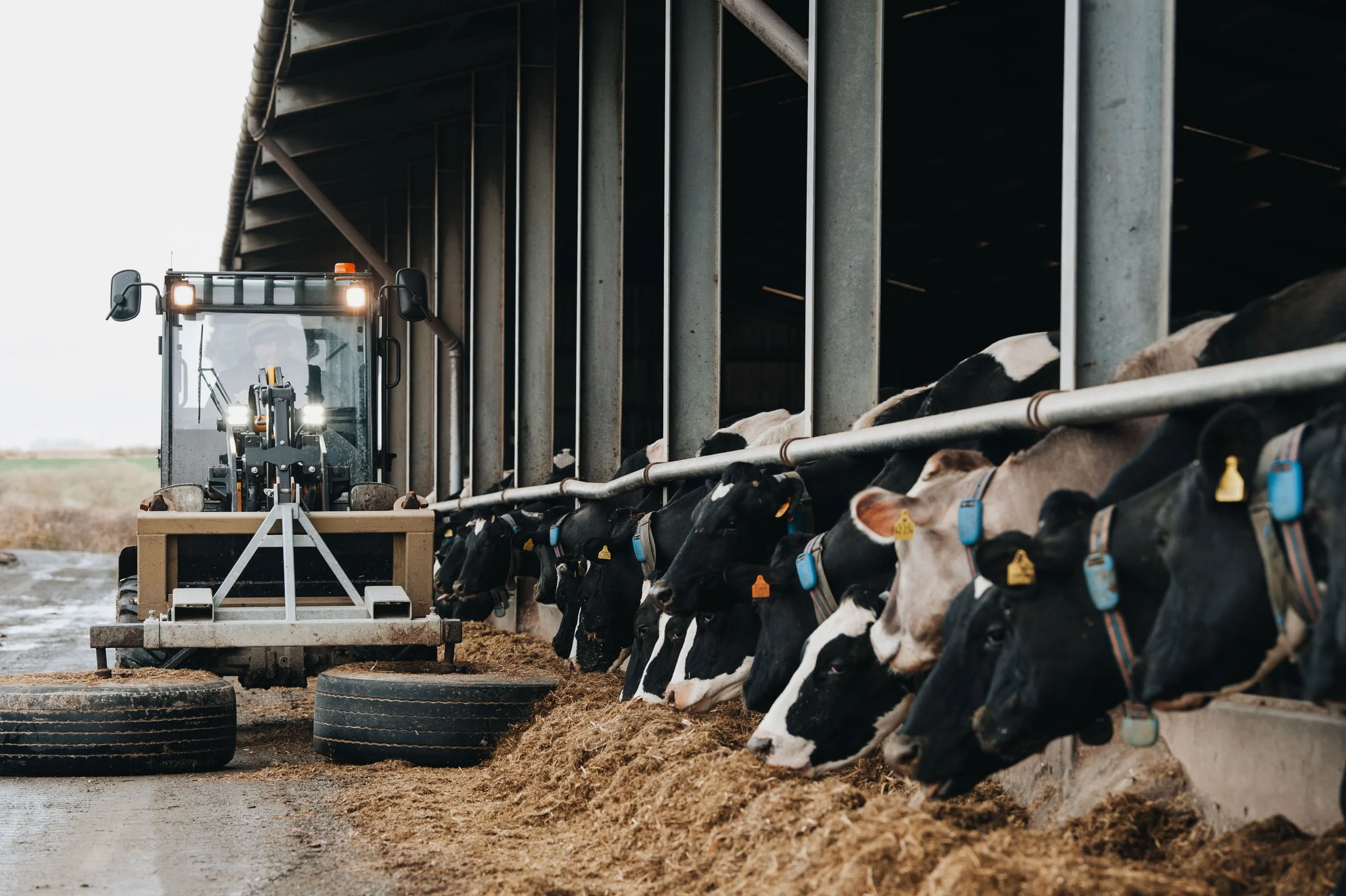
A mindset change around forage production, involving increased cutting frequency and using a proven additive has helped one Pembrokeshire farmer to cost effectively increase milk yields.
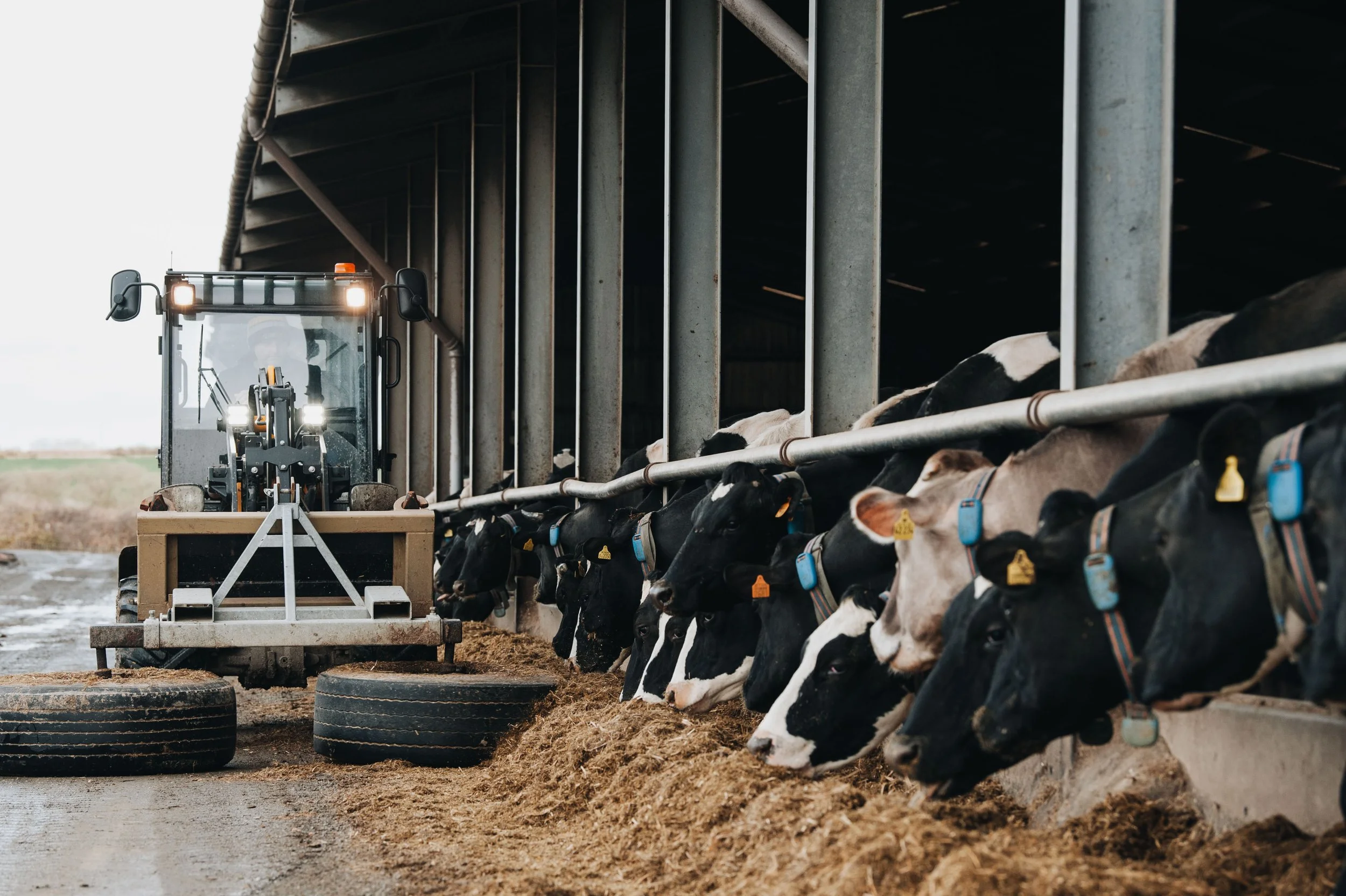
Taking silage making in-house, cutting earlier and more frequently, whilst using a proven additive has helped support a 3,000 litre a cow a year uplift at Mount Farm, Haverfordwest.
Two years ago, Robert Richards decided to overhaul forage production with the view to optimising performance from the 620-cow herd, which was then averaging around 28 litres a cow a day.
We felt we could do more. We have lovely facilities and a great staff base. There was no reason why we couldn’t increase yields and milk quality,” Robert explains. “We wanted to push yields in a cost-effective way. But the biggest elephant in the room was we weren’t making good enough silage.
Traditionally, the focus was on producing bulk from two cuts to optimise contractor costs. In hindsight, Robert says it was “a false economy” because it was lower quality.
It was an old-fashioned approach. We’d always be two weeks later than everyone else. You get plenty of food, but not actually what the cow needs,” he reflects.
It was nutritionist, Richard Lewis of CCF who suggested increasing cutting frequency with the view to boosting silage quality. Several additional changes were also made, including buying a forage harvester and growing their own maize silage rather than supplying starch through a blend. In-parlour feeding also ceased, and changes were made to dry cow rationing.
Taking forage production in-house provided the flexibility to cut in the ideal weather window and stage of grass growth. Robert also decided to cut earlier in the season around the end of April, rather than the end of May, and frequency of cutting was increased from two to four cuts from 2024.
Cutting grass younger and more frequently instantly translated into better quality with silage improving from around 10ME to 11ME. “It was a bit of a game changer. As soon as we started feeding it we realised it was the way to go. Cows were milking like stink.”
Keen to safeguard quality in the clamp, Robert took Richard’s advice to invest in a proven silage additive, and in 2025, Richard applied Ecosyl to every cut.
We thought it would enhance the nutrients and hold on to the quality and give it a kick when we feed out,” he explains.
The impact of better quality and improved palatability was evident in improved intakes at the feed fence. Robert quickly realised the herd had the potential to produce more, so in September 2025, he introduced a third milking. Cows now average 35 litres a cow a day.
With his milk price dropping 15-16ppl since Christmas to around 30ppl (at time of writing), he believes committing to his forage strategy is even more important this year, including using an additive.
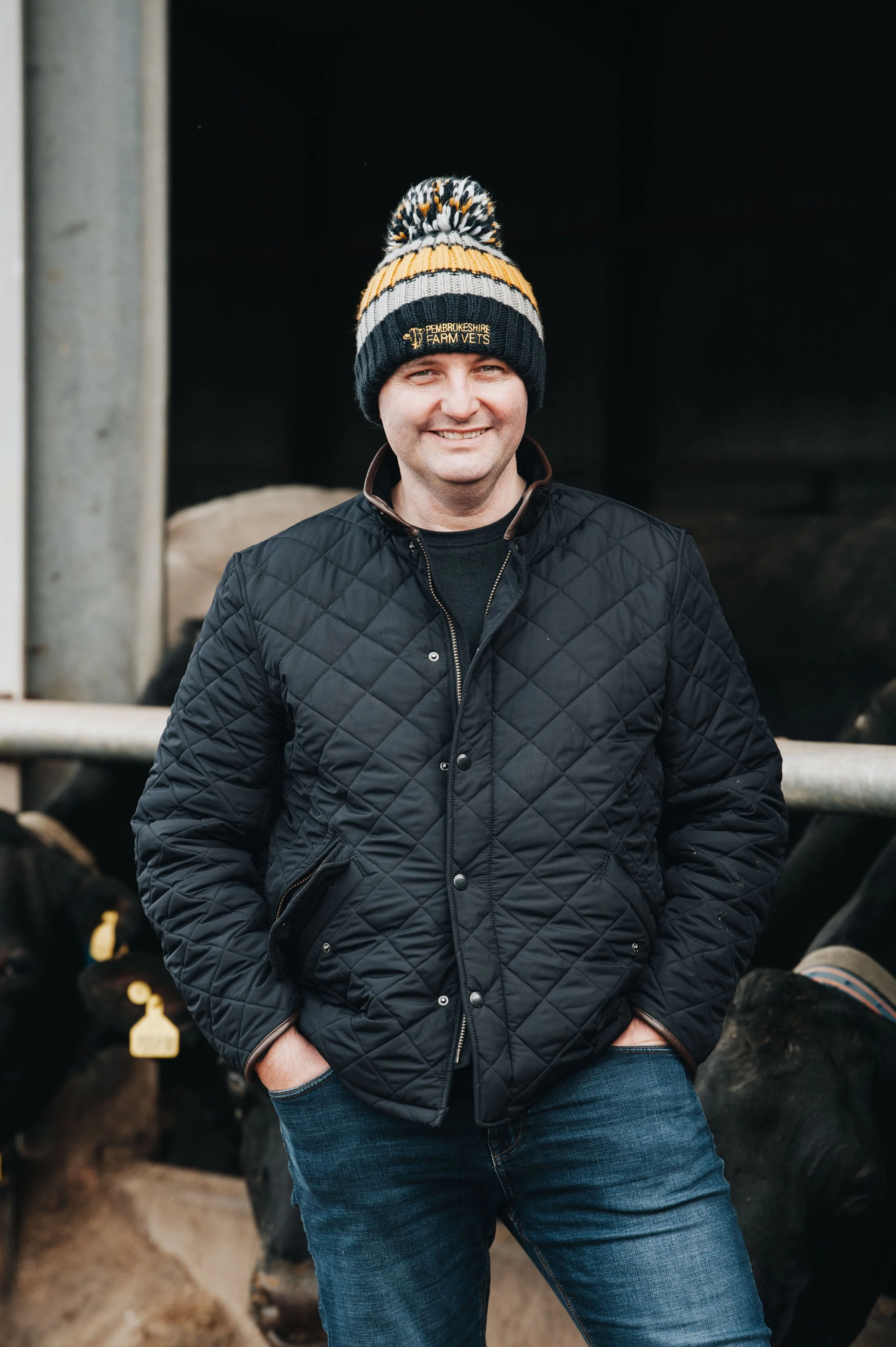
With milk price dropping, we need efficiency there and we need milk in the tank and at a reasonable price to produce,” he says. “Farming is a rollercoaster and in amongst the rollercoaster are speed bumps. If you chop and change you won’t benefit from the upticks. If we weren’t to put additive on, we’d save something now, but when milk price does improve, that’s when we need the cows to give it some. And that’s where we’ll need quality forage to drive the business forward.
Farm Facts:
Robert Richards farming partnership with wife Lindsey and father, Peter.
750 acres.
620 Holstein Friesians milked three times daily.
Yielding 11,000 litres a cow a year at 4.15% fat and 3.50% protein.
Buying-in replacements.
Better forage quality is now at the heart of the farm’s future plans – is there more potential in your silage?