
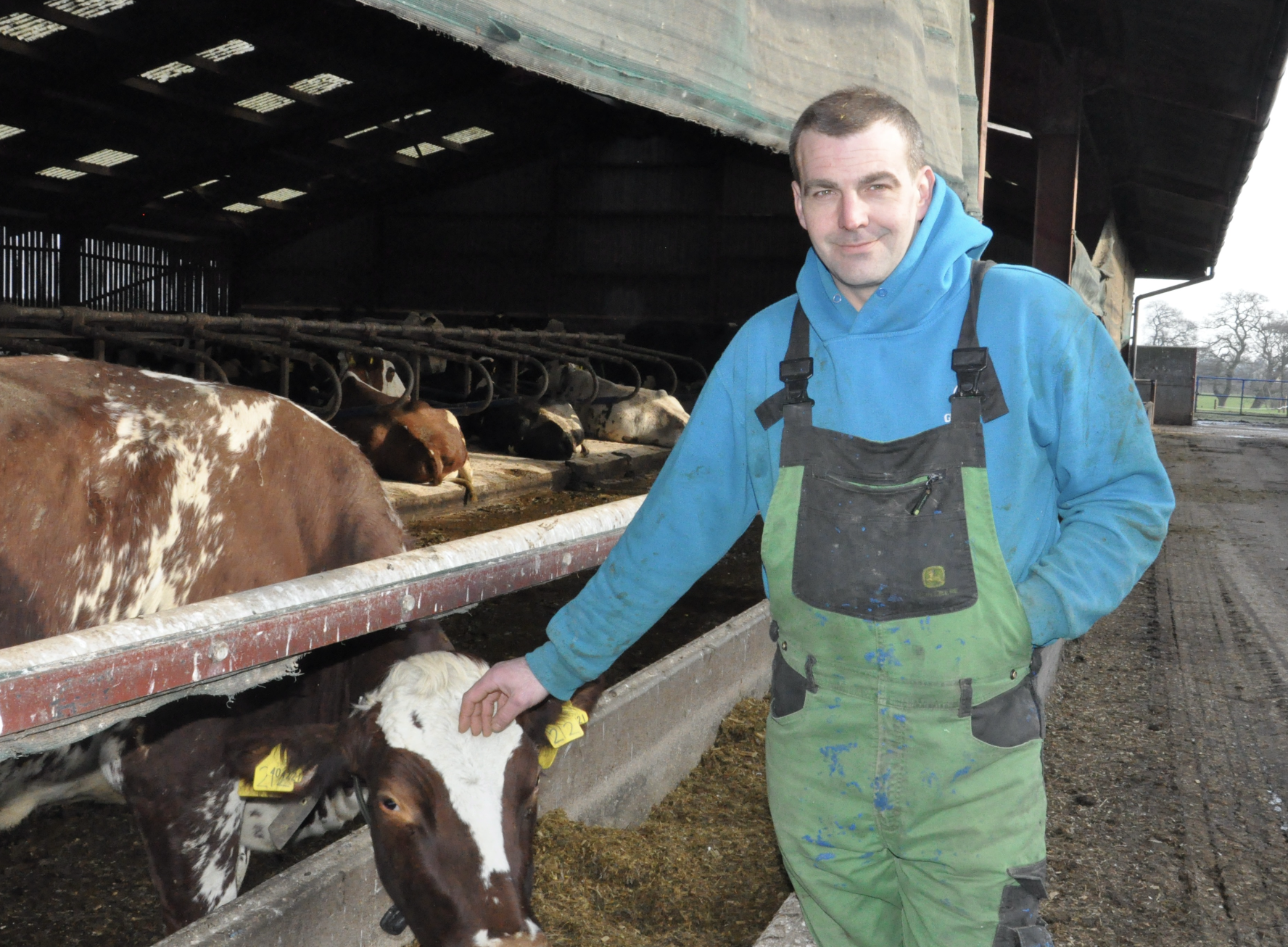
Squeezed milk prices and tight silage stocks are seeing Shropshire farmer Mark Fitton squaring up for a challenging year in 2026.
I always like a challenge, but it’s going to be a testing year.” That is the view of Mark Fitton, who milks 250 Procross Swedish Red x Montbéliarde x Holsteins at The Farms near Whitchurch.
Mark says: “We’re going to have to pull out all the stops. This has been the fastest milk price drop we’ve ever seen.”
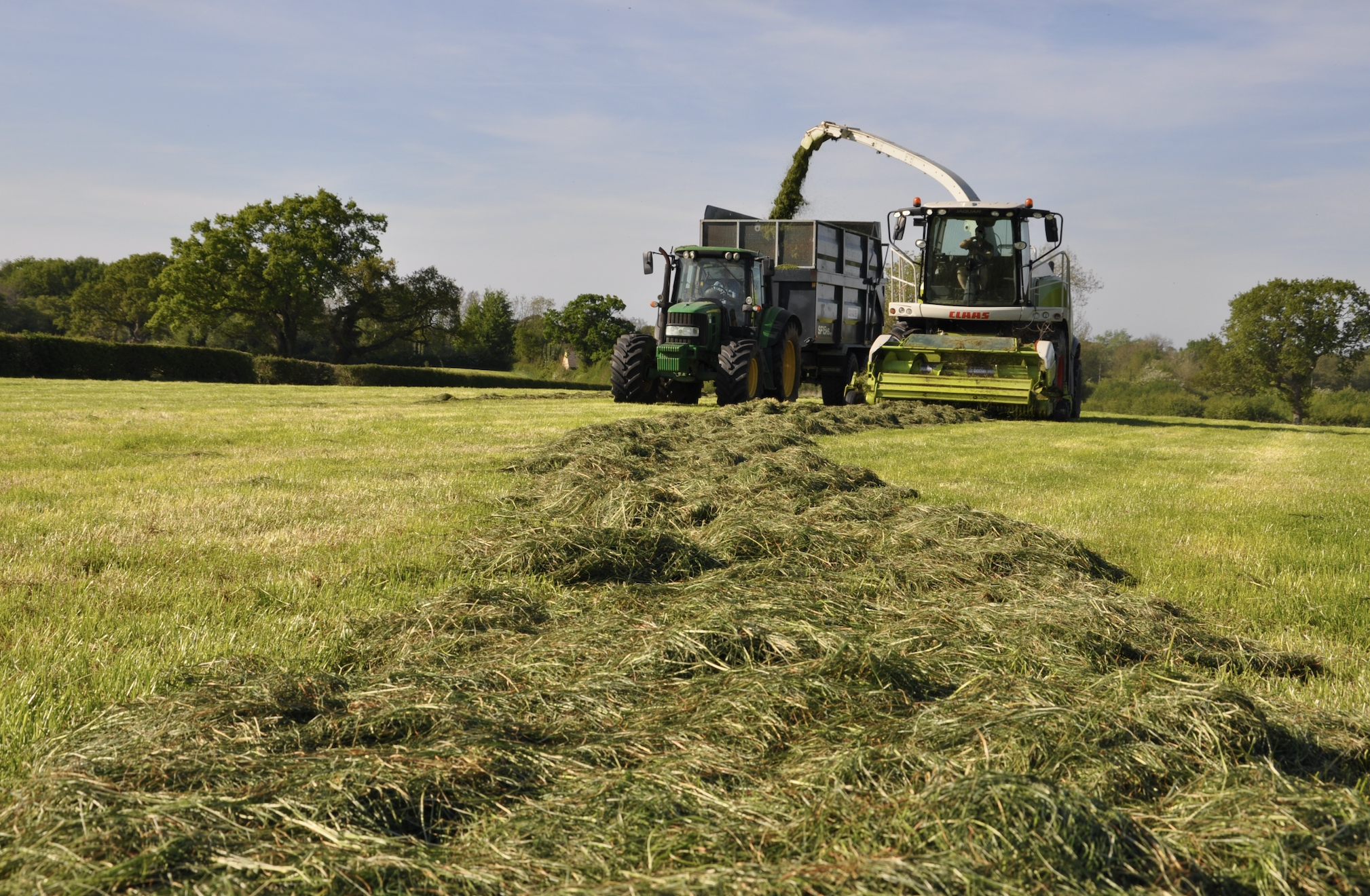
Lack of grass growth due to last summer’s drought meant only three grass silage cuts were possible on the farm in 2025, compared with the normal four or five. And while the late third-cut when autumn rain finally arrived did provide a welcome boost, Mark says tonnage-wise the farm is still massively down, even with the third-cut, and the maize silage tonnage was also down.
“I need to rebuild forage stocks back to where they should be,” he says. “I want as much as possible. I can always use it or sell it. Ideally, we’ll aim to have some carryover stocks.”
Silage quality
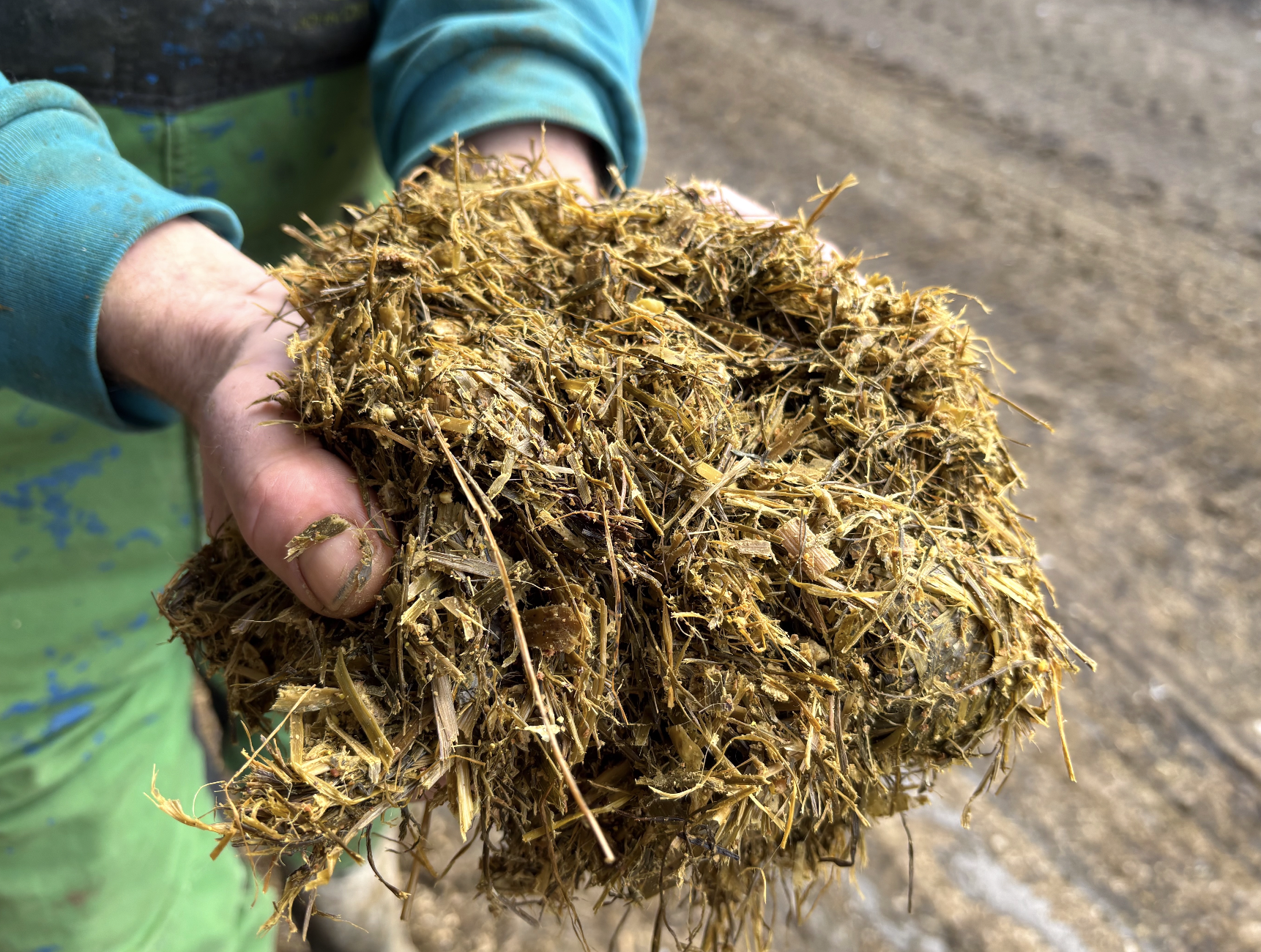
The hot summer meant that the quality of second-cut grass silage also suffered, as it rapidly dried out in the field. Fortunately, first and third-cut qualities were more pleasing, and Mark says the Ecosyl inoculant worked well.
First-cut analysed at 31.4% dry matter (DM), 18.1% protein and 12.1 ME. Second-cut was 47.0% DM, 16.4% protein and 10.7 ME. And third-cut was 26.5% DM, 18.2% protein and 11.5 ME.
First-cut and third-cut were both 18% protein, which is very good. Third-cut was a bit wet. It’s a shame we couldn’t get it drier, but you’re at the mercy of the weather.
“Second-cut was very dry, even though we mowed it then rowed it up pretty much straightaway.”
Head start
Hopefully, a head start on rebuilding grass silage stocks will come from fast-growing ryegrass planted on the farm’s 35ha of maize ground after the maize was harvested last year.
We didn’t manage to get an autumn cut off this but there was loads of grass on it,” Mark explains, “and we’ve had sheep on it over winter. We’ll feed it early with urea then get a spring cut off it before the land goes back into maize.
“Overall, the focus will be on making the best grass silage and maize silage we can this year. The less bought-in feed we need, the better. We can’t affect the milk price but we can affect the accumulated costs. Dad used to say, with low milk price, you’ve got to make good silage.”
For Mark, good silage remains the strongest defence against a tough year ahead.