Win With Our 2022 Volac Forage Calendar Competition

Have you entered the Volac Forage calendar competition yet?

If not, get snapping!

The winners will receive a printed canvas of their winning image plus loads of Volac goodies, along with being featured in the Volac Forage 2022 Calendar. The best images will also be showcased on our blog and across social media!

Competition categories 

  • Silage Making

  • Farming Views

  • Young Farmers

  • Maize Pics

  • Sheep Dogs

  • Silage Clamp

  • Family Farming

  • Favourite Cow

  • Cattle Sheds

  • Baling Pics

  • Farming Sunsets

  • Winter Farming

How to enter

To enter, simply post your photo on Facebook, Twitter or Instagram, using #VolacCalendarCompetition2022 or you can email your photo to enquire@volac.com.

Please make sure you provide your name, address and contact number so that we know where all the fantastic photos have come from!

The competition is open now, and will run until October 15th 2021. 

Rules

  1. The photo must be taken by the person entering.

  2. We can only accept digital images.

  3. You can enter one photo. Make sure you have a file size of at least 1Mb (incase you win).

  4. Include your name and farm address with your entry.

  5. The closing date of the competition is 15th October 2021.

  6. Photos must depict ‘any of the categories mentioned above’.

  7. Judging will take place within 2 weeks of the closing date and we’ll contact all prize-winners within 21 days.

  8. Volac will not accept responsibility for lost or damaged entries.

  9. Volac reserves the right to use any entry for commercial use.

Terms and conditions

  1. The competition is only open to residents of the United Kingdom and Ireland. All entries (received by the 15th October 2021) will be judged by Volac – the judges decision is final.

  2. By entering this competition you are giving Volac permission to use your photographs for commercial purposes.

  3. This competition is being run by Volac International Ltd, who can be contacted at Volac House, Orwell, Royston, Herts, SG8 5QX. Telephone: 01223208021.


Good luck! 

Visit us at UK Dairy Day 2021

The countdown is on to UK Dairy Day 2021. Join us, at The International Centre in Telford on Wednesday 15th September 2021, for a day jam-packed with all things dairy (and silage of course!)

106269356_1458167387720720_865658226342391985_n.jpg

This year is all about sustainability, if you're looking for advice on how to get the most out of your home grown forage to reduce brought in feeds on your farm, we are here to help. So if you’re visiting UK Dairy Day, why not pop to our stand for a chat, you could pick up some silage making techniques to improve your home grown forage.

Volac aims to set the bar high for sustainable and ethical sourcing of materials, one example includes the use of HDPE plastic, known as the most environmentally stable of all plastics when recycled. Why not join us for hot topics on farming sustainability on stand H133. You’ll also have the chance to get hands on with some interactive exhibits on the stand and with sustainability at the heart of everything we do, you can learn more about Volac sustainability policies and how these can be implemented on your farm.

Visit Volac on stand H153!

With the drive to farm sustainably, be sure to capitalise on the excellent potential in this year’s forage maize crops as a high-energy, home-grown feed for dairy cows. Do this by minimising nutrient losses and wastage when turning maize crops into silage.

Those are the forage messages from Volac at this year’s UK Dairy Day. The company says this season has set the scene for some very good maize crops. But maize can harbour a range of undesirable microbes – for example on dying leaves and on rotting tassels that collect in leaf joints – which can feed on its nutrients and interfere with preservation in the clamp.

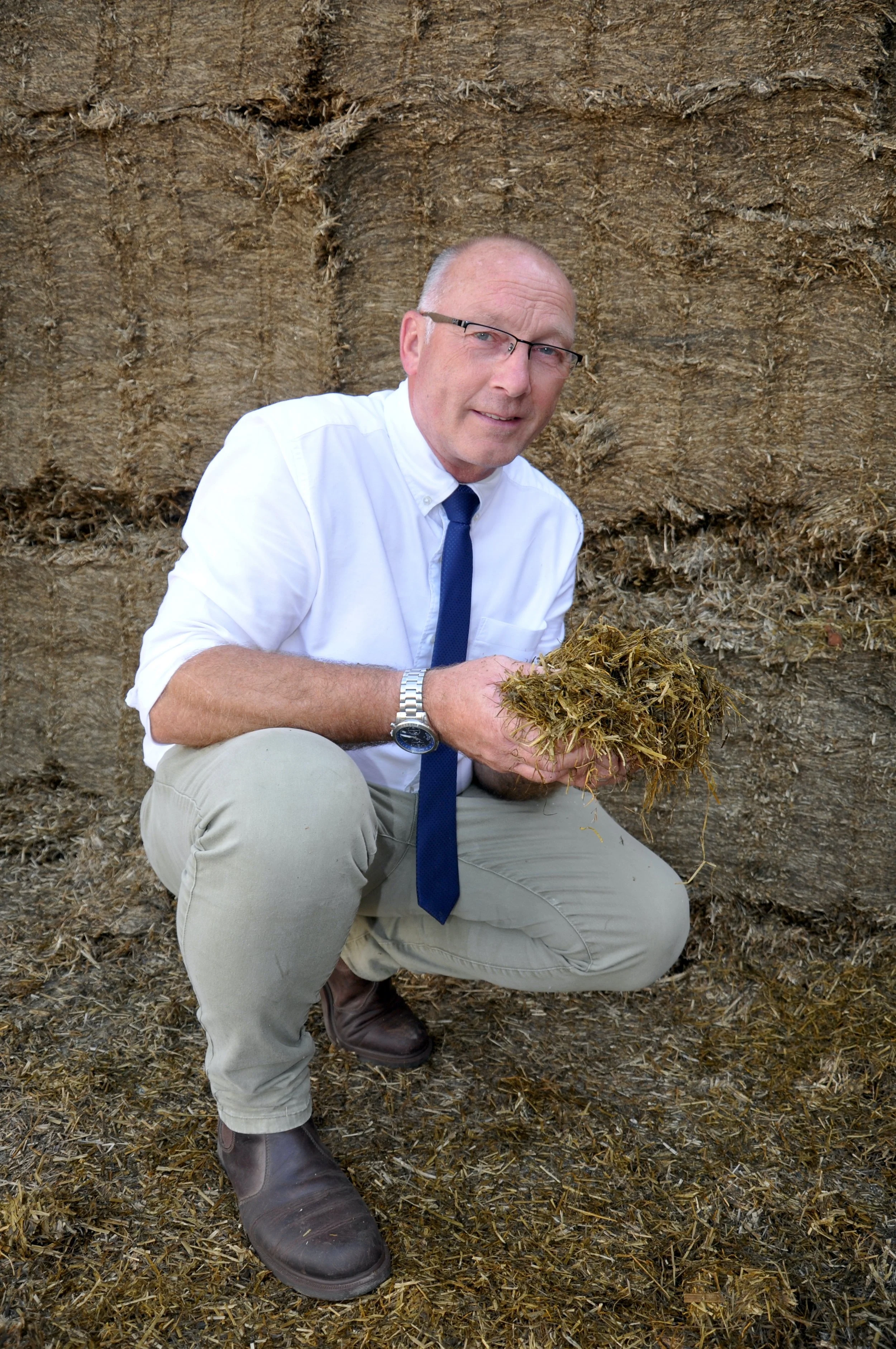
Volac silage expert Ken Stroud says: “Unless prevented, undesirable bacteria, yeasts and moulds can cause losses equivalent to between one and two trailer loads of dry matter out of every 10 trailer loads ensiled”. More importantly, losses aren’t just the least nutritious parts of the dry matter. They are likely to be sugars and starches, which are the main energy sources that maize is grown for.”

The event is completely FREE to attend, with no pre-registration required, so it’s also a great opportunity to get out and catch up with friends and colleagues in the dairy industry, after what feels like an eternity in lockdown. We would love for you to join us at UK Dairy Day, where we can assist you with any queries relating to producing consistently better silage on your farm, along with any other dairy concerns.

If you can’t make it on the day, you don’t have to totally miss out, as we’ll be sharing the day’s events on our social media channels. So be sure to follow us on Facebook and Twitter, and check in throughout the day to find out what we’re getting up to.

Find it at The International Centre, Telford, Shropshire, TF3 4JH.

Can’t wait to see you there!

Beating bad bugs in maize silage

If you grow maize, chances are you’re serious about maximising milk from forage. Because maize silage is an ideal partner for grass silage.

But after all the expense and effort put into growing it, have you ever thought about the number of ‘bad bugs’ – bacteria, yeasts and moulds – that can be present on the crop when it’s ensiled, and which can affect its dry matter (DM) content and nutritional quality?

As well as fungal diseases that can live on maize, such as eyespot, smut and Fusarium, decomposing crop debris and dirt can become trapped in leaf joints. And if the crop is harvested after it has started senescing, then dead tissue is a breeding ground for undesirable ‘bugs’.

These are in addition to any soil microbes that get up onto the stem base, especially in muddy conditions.

Would you ensile grass in the same state?

No? Then what can be done?

Inhibit growth

In a nutshell, minimise the number of bad bugs that get into the clamp in the first place, then inhibit the growth of any that do.

Firstly, make sure the clamp area and any machines coming into the clamp are completely soil-free. But also, harvest at the correct time and cut at the correct height. 

Modern maize varieties often reach the optimum 30-33% DM content for harvest while still green. You don’t have to wait for them to die back. Also, as well as the stem base being a source of soil and mould spores, it is of low nutrition value anyway. So always leave at least 15 cm of stubble. 

To minimise the growth of bad ‘bugs’ that do get into the clamp, a suitable dual-active additive not only helps improve the fermentation, so that the pH falls faster and bad bacteria are inhibited sooner, it also inhibits the activity of yeasts and moulds that cause heating. That’s important because heating is a sure sign that some of the hard work and expense you put into growing maize is going waste.

Finally, consolidate the clamp thoroughly and seal fully. Maize needs compacting to a density of 700 kg of fresh weight per cubic metre. To aid consolidation, consider a chop length of 1.5–2 cm and fill clamps in horizontal layers no more than 15cm deep, not in a wedge shape. 

Seal with an oxygen barrier film on top. Use side sheets folded over this using a minimum 1-2 metre overlap, followed by a top sheet pulled tight, a well-weighted woven sheet, and netting to stop birds damaging the sheet and letting air in.

Maize silage can be prone to losses from inefficient fermentation. These losses are invisible and can run at about 8% for maize harvested at the recommended dry matter content. However in some cases they may be higher – e.g. with some suggestion that DM losses can be as high as 20-30% between the field (pre-harvest) and what finally ends up in the rumen.

Some examples of the benefits of including Lactobacillus plantarum MTD/1 bacteria to produce a faster, more efficient initial fermentation:

  • Makes better use of available sugars

  • Preserves more nitrogen as true protein

  • Reduces fermentation DM losses

  • Minimises undesirable microbial activity

  • Animal performance

Some examples of the benefits of including Lactobacillus buchneri PJB/1 bacteria to inhibit the activities of the yeasts and moulds that cause aerobic spoilage:

  • Less heating

  • Lower DM losses

  • Less physical waste

  • Higher energy feed

  • Less risk of mycotoxins

An example of an additive containing both of these beneficial bacteria is Ecocool.

For more top tips, explore our silage advice or download our Handy Maize Guide today.

Contact Ken Stroud for more information on how you can beat bad bugs in maize silage, 07713 197084 or via ken.stroud@volac.com